
Safety and Innovation for the Future of Energy
The global energy industry is undergoing a qualitative transformation that is reshaping its foundations on two main pillars: safety and innovation. While safety in the past relied mainly on field procedures and operational rules, today it has evolved into a comprehensive mindset that begins at the leadership level and extends to the smallest operational details at work sites. At the same time, innovation is no longer an optional element—it has become the driving force behind greater efficiency, sustainability, and human-centered awareness.
Recent experiences confirm that a culture of safety cannot be achieved through instructions alone; it requires genuine commitment starting from top management and reaching all organizational levels. When safety becomes part of an institution’s identity—not merely a section in an operations manual—a work environment emerges that is built on awareness, responsibility, and vigilance. This is the direction taken by major companies in the global oil and gas sector, which today adopt the concept of “Safety as a Shared Responsibility” as a pillar of operational success.
In this context, behavior-based safety programs play a major role by focusing on the human aspect of prevention. Workers are trained to detect early warning signs of risk and intervene before incidents occur. This administrative shift has turned safety into a daily behavior rooted not in instructions but in professional values, conscious observation, and initiative. Through these programs, the workplace transforms into a cooperative community where protecting human life is the top priority.
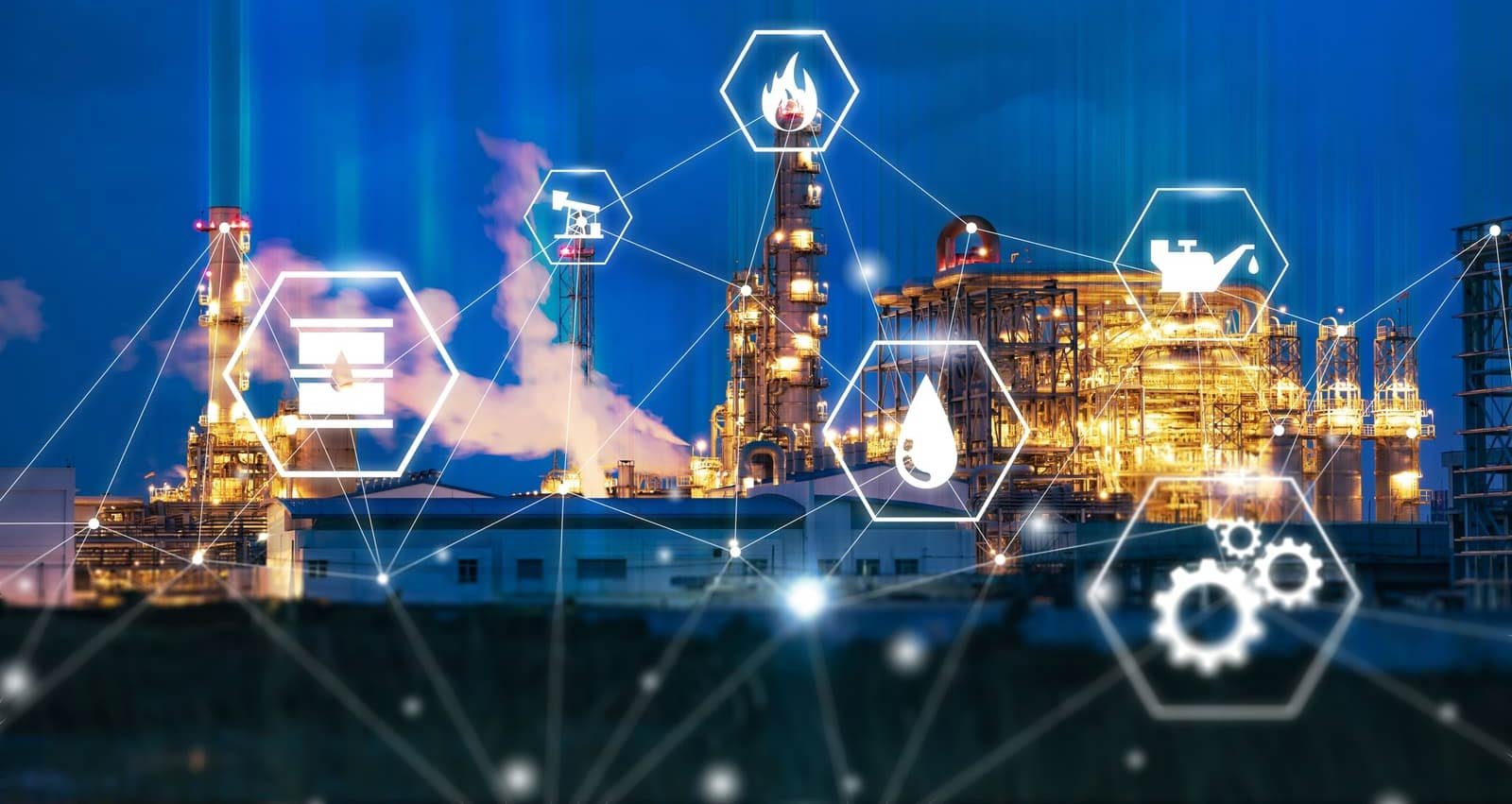
Technology has also revolutionized the concept of safety within the energy industry. Smart monitoring systems and precise sensors installed across refineries, pipelines, and offshore platforms continuously monitor temperature, pressure, and gas emissions, sending immediate alerts when any abnormal change occurs. This enables quick response before minor issues escalate into crises. The massive amount of data collected is later analyzed to develop preventive maintenance strategies and identify recurring risk patterns—turning safety into a science based on knowledge and analysis rather than reaction.
Innovation extends beyond monitoring tools to include advanced field technologies such as drones and autonomous robots that reduce human exposure to high-risk environments. These technologies perform inspections in elevated areas, confined spaces, or underwater, providing accurate imagery and real-time analysis to help engineers detect corrosion, leaks, and structural weaknesses before they worsen. Thus, fieldwork becomes safer and smarter at the same time.
Modern training centers also play a vital role in strengthening worker capabilities in emergency situations. Realistic simulation environments are created to mimic explosions, fires, and oil spills, enabling workers to gain hands-on experience in a controlled and safe setting. This type of training aims not only to teach procedures, but to build confidence, enhance response speed, and reinforce teamwork under pressure.
Because safety today extends beyond protecting people at work to protecting the planet, the environmental dimension has become a core component of modern safety standards. “Green safety” initiatives promote environmentally friendly technologies, reduce carbon emissions, and monitor ecological systems surrounding drilling and production sites. By integrating human protection with environmental protection, a new philosophy emerges—one that sees safety as an ethical responsibility that extends beyond the facility to the community and nature.
Global efforts are also focused on harmonizing safety standards between countries to ensure balanced levels of protection worldwide. Cooperation between governments, regulatory authorities, and major companies is now essential for building a safe global energy system. These efforts have reduced gaps between regions, allowing the same standards to be applied whether on offshore platforms in the north or on onshore fields in the Middle East, Asia, and Africa—enhancing trust and ensuring a stable working environment for all.
Modern organizations have adopted a global system for sharing incident data and operational observations, ensuring that knowledge is not confined within a single company. Every incident is documented, analyzed, and shared with other stakeholders to prevent repeated errors. This approach has proven effective in reducing accident rates and raising transparency within the sector, transforming knowledge-sharing into a collective protection tool that improves overall industry performance.
The human and psychological aspects of safety are equally important. A worker with stable mental health is more focused, disciplined, and less prone to errors. For this reason, recent years have seen a growing focus on mental health and well-being programs for employees in high-stress environments, offering psychological support and professional counseling to ensure a work environment that is safe both physically and mentally.
With ongoing technological progress, the industry is moving toward predictive safety, a new stage of development where artificial intelligence analyzes data to predict risks before they occur. In the near future, such systems will be able to integrate sensor data, maintenance records, and performance reports to estimate the likelihood of hazards days or even weeks in advance—giving teams enough time for proactive intervention.
Combining safety and innovation is no longer an organizational luxury—it has become a fundamental necessity for the modern energy industry. Human safety and environmental protection are two sides of the same coin, and innovation is the bridge connecting them. Every technological advancement must be accompanied by human sensitivity, and every operational improvement must be measured by its ability to protect lives and resources. This sets the stage for a new era in the history of energy—one where humanity comes first, and innovation exists for the sake of life.